
Vana Parva: The Forest of Exile, Wisdom, and Spiritual Transformation in the Mahabharata
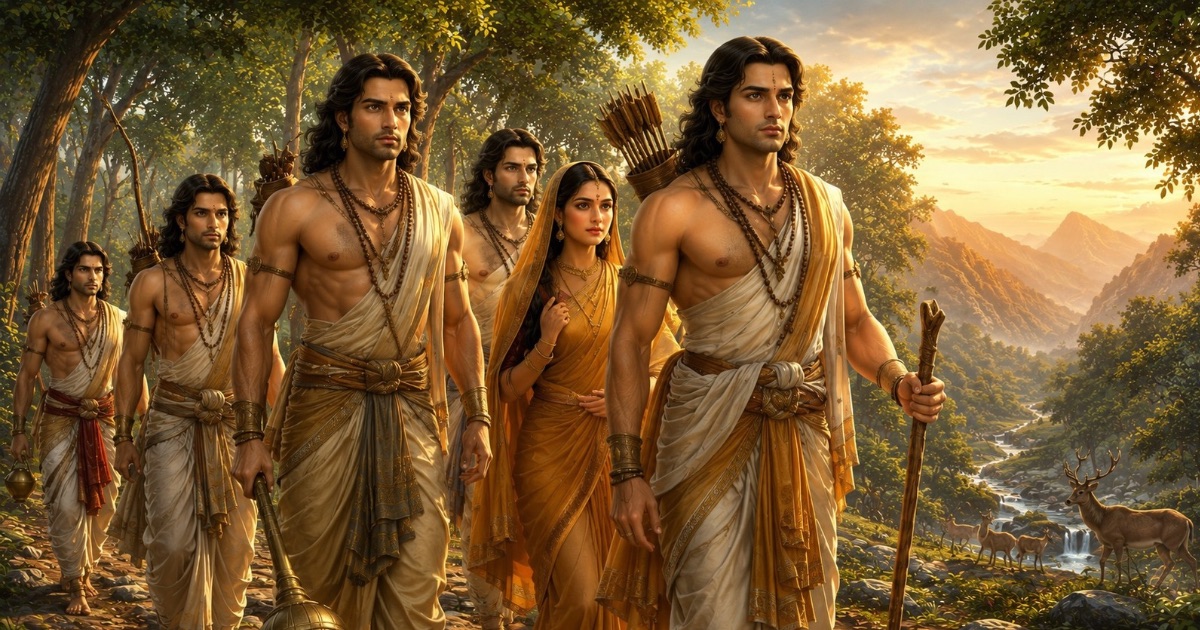
The Vana Parva, also known as the Aranyaka Parva, is the third of the eighteen Parvas of the Mahabharata, composed by Maharshi Vedavyasa. It follows the dramatic events of the Sabha Parva, where Yudhishthira loses his kingdom, wealth, and freedom in the deceitful game of dice arranged by Duryodhana and Shakuni. As a result, the Pandavas, along with Draupadi, are compelled to spend twelve years in exile in the forests, followed by one year of incognito life. Although the Vana Parva narrates this period of exile, it is much more than a story of suffering. It is a profound spiritual journey in which the forest becomes a place of learning, meditation, pilgrimage, and self-transformation. During these twelve years, the Pandavas meet great sages, visit sacred places, receive divine blessings, and learn invaluable lessons on dharma, patience, leadership, devotion, and righteousness. The Vana Parva contains approximately 324 chapters and is traditionally divided into twenty-one Upa- parvas, each contributing uniquely to the spiritual and moral development of the Pandavas.
- Aranyaka Parva:
The Pandavas begin their twelve-year exile, accompanied by Draupadi and many sages. Surya grants Yudhishthira the miraculous Akshaya Patra, ensuring endless food and demonstrating that divine grace supports those who uphold righteousness despite hardship.
- Kirmira-vadha Parva:
The demon Kirmira, seeking revenge for his brother Bakasura’s death, attacks the Pandavas. Bhima defeats and kills him in a fierce battle, symbolizing the triumph of courage, strength, and righteousness over evil.
- Arjunabhigamana Parva:
On Vyasa’s advice, Arjuna departs for the Himalayas to perform severe penance and obtain celestial weapons. His journey emphasizes discipline, self-control, determination, and spiritual preparation before confronting future challenges.
- Kirata Parva:
Lord Shiva appears as a hunter (Kirata) and tests Arjuna’s courage through combat. Recognizing Shiva’s divinity, Arjuna humbly surrenders and receives the powerful Pashupatastra, rewarding devotion, humility, and perseverance.
- Indralokabhigamana Parva:
Arjuna ascends to Indra’s heaven, receives divine weapons, masters celestial warfare, and learns music and dance from Chitrasena. Urvashi’s curse ultimately becomes a blessing during his incognito year in Virata.
- Nalopakhyana Parva:
Sage Brihadashva narrates the story of King Nala and Queen Damayanti, illustrating how gambling causes ruin while patience, virtue, perseverance, and self-mastery ultimately restore happiness, prosperity, and righteous kingship.
- Tirtha-yatra Parva:
Guided by Sage Lomasha, the Pandavas undertake a sacred pilgrimage across Bharatavarsha, visiting holy rivers, mountains, and shrines while learning ancient legends that emphasize devotion, cultural unity, purification, and spiritual enlightenment.
- Jatasura-vadha Parva:
The demon Jatasura disguises himself as a Brahmana and abducts Draupadi and the Pandavas. Bhima pursues, defeats, and kills him, demonstrating vigilance, courage, and unwavering protection of family and righteousness.
- Yaksha-prashna Parva:
Yudhishthira answers the Yaksha’s profound questions on dharma, truth, life, and death. Pleased with his wisdom, the Yaksha restores his brothers, proving that knowledge, patience, and righteousness surpass physical strength.
- Ajagara Parva:
Bhima is captured by the cursed King Nahusha in serpent form. Yudhishthira’s philosophical discourse on virtue, truth, and dharma frees Nahusha, illustrating that wisdom possesses greater power than physical might.
- Markandeya-samasya Parva:
Sage Markandeya consoles Yudhishthira by narrating inspiring stories of righteous kings, devoted women, and divine justice, teaching that suffering tests virtue while unwavering adherence to dharma ultimately ensures lasting victory.
- Draupadi–Satyabhama Samvada:
Satyabhama asks Draupadi the secret of maintaining harmony with her husbands. Draupadi explains that respect, humility, truthfulness, patience, and dedicated service—not magic—form the foundation of happy family life.
- Ghosha-yatra Parva:
Duryodhana visits the forest intending to mock the Pandavas but is captured by Gandharvas. The Pandavas rescue him despite past injustice, demonstrating forgiveness, compassion, family honour, and Yudhishthira’s unwavering commitment to dharma.
- Mriga-svapna Parva:
Yudhishthira dreams that the forest deer seek protection from excessive hunting. The Pandavas leave the forest, highlighting compassion for wildlife and emphasizing environmental responsibility centuries before modern conservation principles emerged.
- Brihadashva Parva:
Sage Brihadashva continues guiding Yudhishthira through moral instruction and ancient narratives, strengthening his patience, wisdom, and confidence while demonstrating that adversity prepares righteous leaders for future responsibilities and enduring success.
- Draupadi-harana Parva:
Jayadratha abducts Draupadi during the Pandavas’ absence. Bhima and Arjuna defeat him, rescue Draupadi, and present him before Yudhishthira, who tempers justice with compassion by sparing his life for family harmony.
- Jayadratha-vimokshana Parva:
After humiliating Jayadratha for abducting Draupadi, the Pandavas release him instead of executing him. Their mercy reflects Yudhishthira’s commitment to justice balanced with compassion, though it later influences the Kurukshetra War.
- Ramopakhyana Parva:
Sage Markandeya narrates Lord Rama’s exile, struggles, and eventual triumph to reassure Yudhishthira that patience, steadfastness, and unwavering commitment to dharma ultimately overcome injustice and restore rightful sovereignty.
- Savitri-upakhyana Parva:
Princess Savitri follows Yama after Satyavan’s death and, through wisdom, devotion, and determination, wins back her husband’s life, becoming the eternal symbol of fidelity, courage, spiritual strength, and unwavering faith.
- Kundala-harana Parva:
Indra, disguised as a Brahmana, requests Karna’s divine armour and earrings. Despite knowing the consequences, Karna donates them, earning immortal fame as Dānavīra Karna, the supreme embodiment of generosity and sacrifice.
21. Aindradyumnopakhyana Parva: The Aindradyumna Parva recounts the story of the virtuous King Aindradyumna, whose worldly fame fades over time. Guided by the immortal sage Markandeya, he is eventually recognized by the ancient tortoise Akupara, who remembers the lake formed through the king’s generous cow donations. The episode teaches that wealth, power, and reputation are temporary, whereas charity, righteous deeds, and steadfast adherence to dharma create an enduring legacy that transcends time.